


case studies
The following case studies are drawn from ELACC, Esperanza Community Housing, and Little Tokyo Service Center, the three nonprofit affordable housing owners that form the Retrofit.LA cohort. They completed these projects in real time, figured out what worked (and what didn't), and shared their experience openly so other organizations could learn from it. None of them started with decarbonization expertise. All of them finished with it.
Case Study #1: Vallejo Apartments (ELACC)
Property Overview
Location: 2611 Vallejo St., Los Angeles, CA
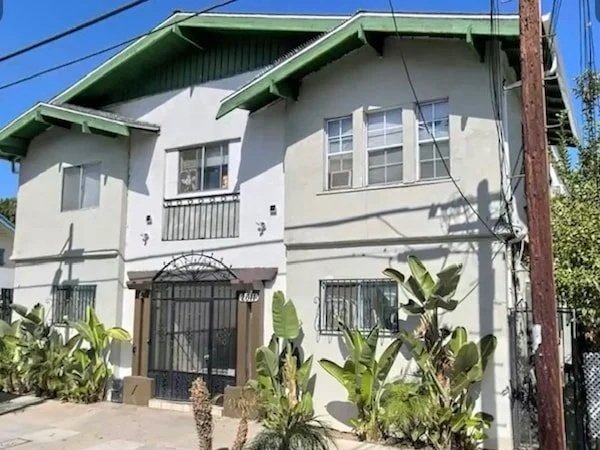
Property Type: Two buildings, 16-unit multifamily apartment building, and a detached single-family residence
Ownership: East Los Angeles Community Corporation (ELACC)
BUILDING DETAILS (2)
16-Unit Apartment
Built in 1913
Two-story wood-frame and stucco structure
The common area is 870 sq ft on each floor (1,740 sq ft total common area)
About the Utilities
Master water heater that services entire building. Owner pays water and gas.
Electricity for common areas. Owner pays for common area electricity.
Owner pays trash
Tenant pays electricity and gas (gas is for stove and wall heater)
Single Family Residence
Single story wood frame and stucco building
3 bedrooms / 2 bathrooms
The home is 896 square feet
Tenants pay for all utilities: gas, water, + electricity
PREVIOUS IMPROVEMENTS
After acquiring the property in 2017, ELACC completed basic repairs in 2018: roof replacement, attic insulation, and electrical upgrades. Enough to stabilize the building, but not enough to address the deeper issues. The systems were old, the energy performance was poor, and without air conditioning, residents faced extreme heat every summer. ELACC knew they'd need to come back. Decarbonization gave them both the framework and the funding to finally do it right.
Scope of Work Financed:
Mini-split heat pumps for all units (the building previously had no air conditioning)
Central heat pump water heaters
Induction cooktops replacing gas
LED lighting and low-flow fixtures throughout
New windows, exterior insulation, and exterior paint
Full electrical service upgrade (200 to 600 amps)
Project Financing (97% cost coverage from stacked incentives and grants):
Total Project Cost: $980,799 (cost increased ~22% during construction; original budget was ~$800K)
MAHEP: $132,700 (14%) | LIWP: $138,089 (14%) | CAMR: $182,057 (19%) | TECH: $345,000 (35%)
Grants: $156,500 (16%) | Replacement Reserves: $26,453 (3%) | Unexpected costs: ~$140,000 in corrections
Bridge financing: a $471,000 incentive bridge loan through the RETR-Fund facility covered upfront costs and was repaid as incentive payments arrived
The SOW was sized to incentives and grants secured before construction began, reflecting ELACC's standard practice of not moving forward until funding is in place. The original budget was ~$800K. During construction, the city’s final inspection required a complete re-piping and new water meter ($130,000 unexpected), and an electrical rewire to bring the building up to current code. Although unbudgeted, these corrections brought the building up to code and extended its useful life without delay. Timeline: planning began in August 2022, the scope was approved in August 2023, and construction started in April 2025, running about twelve months.
Why This Matters for Preservation of Housing / Co-Benefits
Induction cooking to replace carcinogenic gas
Vallejo’s aging systems and rising utility demands place the property at risk of higher operating costs and future capital failure
The bridge-loan model helped ELACC complete energy-efficient upgrades without draining reserves
Improved system reliability, lower energy use, and safer indoor conditions support long-term affordability and stability for tenants
By investing now, ELACC extended the building’s useful life and protected the homes of long-term residents
Estimated annual savings for residents: $700 per unit. Required electrical service upgrade: 200 amps → 600 amps. No tenant relocation was required throughout the project. Planned solar, with roughly 99% of its cost covered by CAMR and 80% of the utility benefit flowing to tenants, is expected to increase savings further.
Case Study #2: Villa Esperanza Apartments (Esperanza Community Housing)
Property Overview
Location: 255 E 28th St., Los Angeles, CA 90011 – South Central
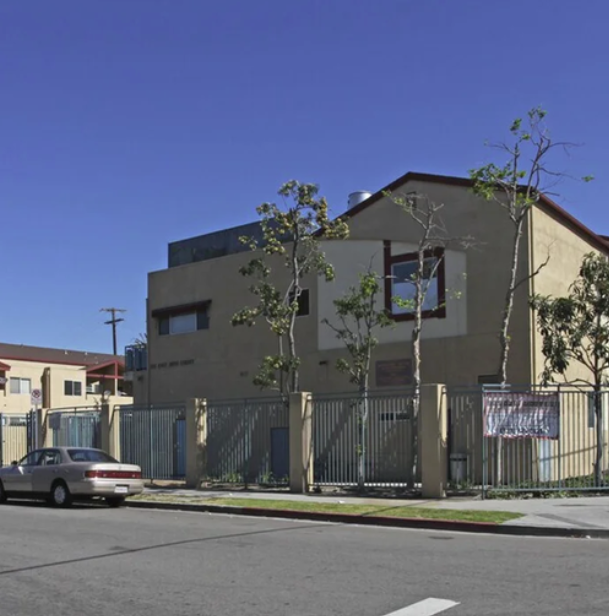
Property Type: Consists of a U-shaped building surrounding a central courtyard. The site includes a childcare center and two play yards along with underground parking.
Ownership: Esperanza Community Housing
Building Details
Low-Income Housing Tax Credit
Built in 1995
33 units
Stacked incentives
Decarb financing through contractor
Project Financing
Financing figures for Villa Esperanza to be finalized when the project reaches close-out.
Why This Matters for Community Health / Co-Benefits:
Cooling for residents who didn’t have it
Induction cooking to replace carcinogenic gas
Case Study #3: Angelina Apartments (LTSC)
Property Overview
Location: 1336 W Angelina St., Los Angeles, CA 90026
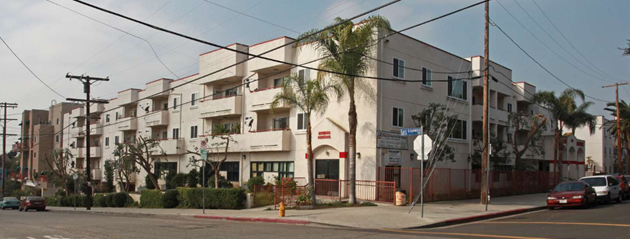
Property Type: Multi-family property. 3 stories. On-Site Parking Available.
Ownership: Little Tokyo Service Center
Building Details:
Low-Income Housing Tax Credit
82 units
Stacked incentives
Decarb financing through contractor
Property was constructed in December 1999. Offers on-site childcare center that serves up to 80 children. Community space for after school tutoring program and other youth programming
Why This Matters for Resilience / Co-Benefits:
More efficient appliances
Scope and financing details for Angelina Apartments will be added as the project completes close-out.
Case Study #4: Lorena Terrace (ELACC)
Property Overview
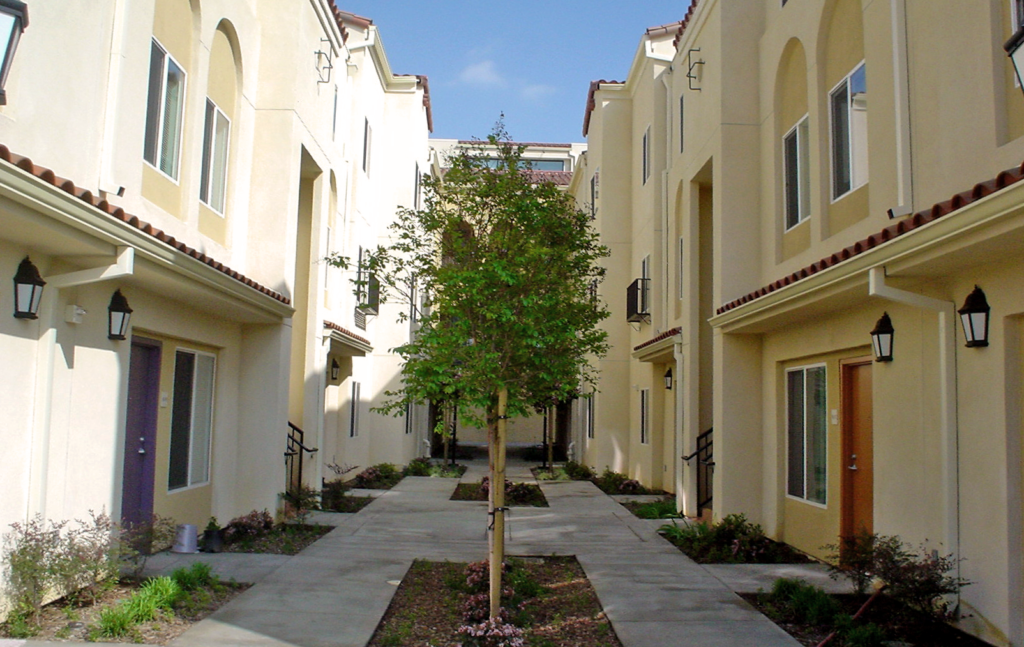
Location: 2nd St., Los Angeles, CA (Boyle Heights)
Property Type: Low-Income Housing Tax Credit (LIHTC) multifamily
Ownership: East Los Angeles Community Corporation (ELACC)
Building Details:
49 units
Low-Income Housing Tax Credit
ELACC’s first LIHTC occupied retrofit project
Scope of Work:
Heat pump water heaters (central + in-unit)
Heat pump HVAC (mini-splits for all units)
Induction cooktops replacing gas
LED lighting throughout
Solar PV array (approximately 99% of electricity cost covered by CAMR; 80% utility benefit to tenants, 20% to owner)
Project Financing (91% of total project costs covered by stacked incentives):
Total Project Cost: $1,628,402
AQMD: $390,000 | LIWP: $433,725 | CAMR: $453,968 | TECH: $200,900
Grants: $150,000 (covered financing costs)
Remaining 9% financed via RETR-Fund (Housing Partnership Fund + Raza Development Fund, $3M facility)
How the Project Came Together
Lorena Terrace used the RETR-Fund model: a $3 million portfolio-level credit facility co-funded by Housing Partnership Fund and Raza Development Fund, secured through assignment of incentives rather than collateral on the property. AEA provided technical assistance throughout, including equipment specification and incentive administration. The facility sits at the ELACC parent-organization level, not on the building, so healthier properties in the portfolio can support ones that might not qualify for asset-level financing on their own.
One detail from tenant engagement that captures the spirit of the project: during pre-construction outreach, one tenant asked if they could add a dishwasher. Climate can feel abstract; a dishwasher is concrete. ELACC said yes. It got people excited in a way that ‘decarbonization’ alone never would have.
A Hard Lesson on Equipment Specifications
ELACC assumed unit closets at Lorena Terrace were uniform and ordered heat pump water heaters for all 49 units before installation started. When crews got into individual units, some closets were too small for the selected model. The order had to be revised. Additionally, two units had their HPWHs placed in outdoor closets designed for indoor-rated units, triggering manufacturer warranty complications. Total lost incentives from spec deviations: approximately $40,000. ELACC’s response: they now require contractors to walk every unit before bulk ordering, and lock down equipment placement in the contract before ordering begins.
Why This Matters
Lorena Terrace was ELACC’s first LIHTC retrofit and their most complex project to date: 49 units, stacked incentives from four programs, an in-unit solar benefit, and occupied throughout. Its lessons on financing structure, equipment specification, and tenant engagement apply directly to any LIHTC affordable housing provider considering a first decarbonization project.
Affordable housing owned by ELACC that began this work with no decarbonization experience and completed projects that are now a replicable model for the sector.
Financing structure (RETR-Fund) that removes asset-level debt, making it accessible for organizations with constrained balance sheets.
Proof that stacking four incentive programs is achievable with the right technical assistance.
These four buildings are the evidence base for this guide. Between them they cover a 100-year-old NOAH walk-up and a modern LIHTC property, contractor financing and a portfolio-level credit facility, smooth close-outs and expensive surprises. None of the organizations behind them started with decarbonization expertise; all of them finished with it.
If your organization is where these three were a few years ago, start with the readiness questions in Section 2, and reach out: the Retrofit.LA cohort built this guide so you would not have to learn these lessons the expensive way.
Any questions? Contact us for more information.